AI Comedy vs Human Humor: How AI Joke Generators Really Work
AI can produce a setup and punchline in seconds, but a person still supplies the room, relationship, timing, and judgment that make a joke land.

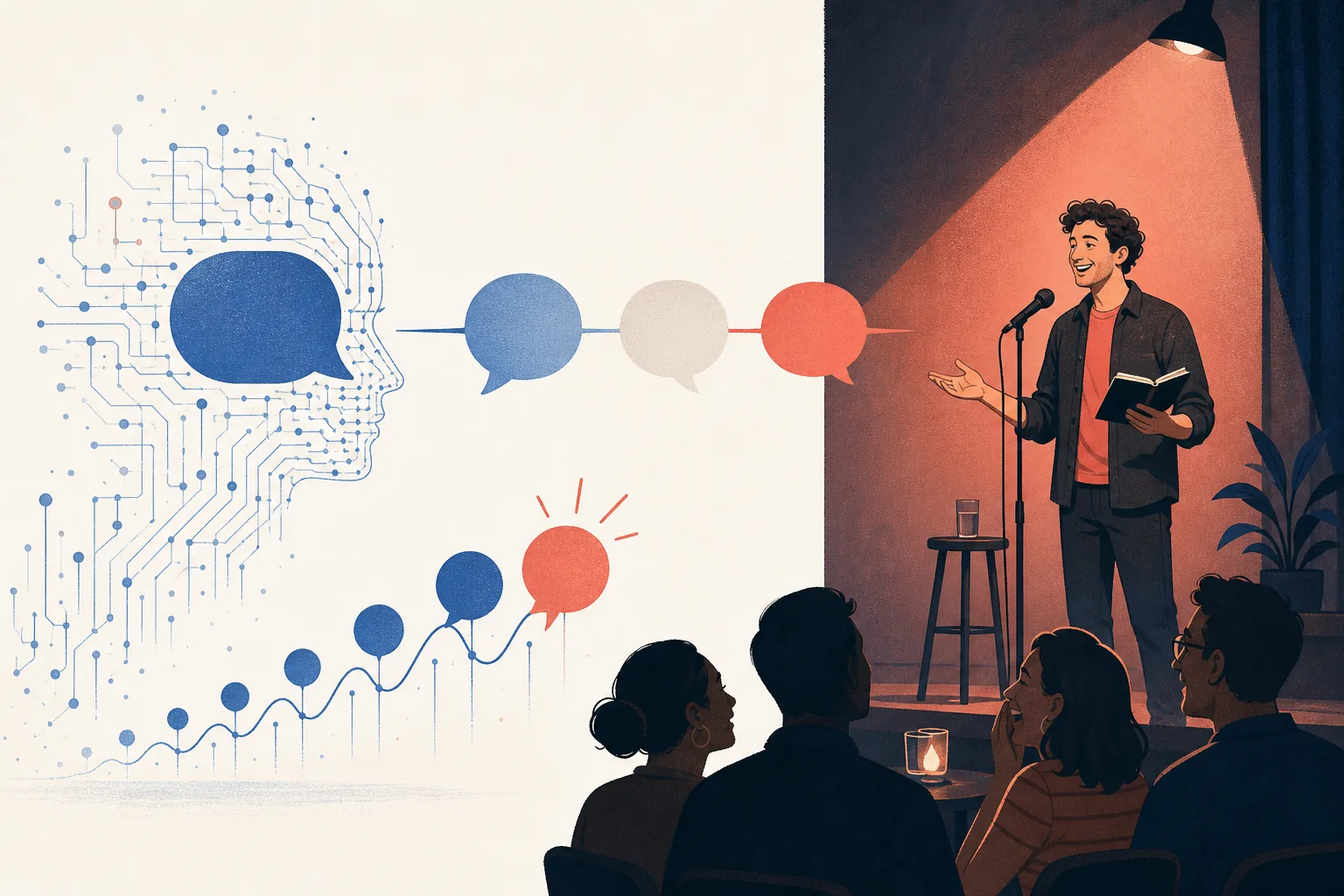
Table of Contents
AI comedy is not a tiny robot comedian hiding inside a text box. It is a pattern-making system that can combine a topic, a format, and a surprising turn into a joke-shaped answer. That makes an AI joke generator useful for brainstorming, but it does not remove the human part of humor.
The short answer is that AI can be funny in the right conditions. It is especially good at producing several variations, trying familiar formats, and turning a vague idea into a workable setup. It is less reliable at shared history, subtext, local references, timing, and knowing when a joke should not be made.
This guide explains what AI comedy means, how a generator builds a joke, where human humor still has the advantage, and how to edit AI-generated jokes so they sound more specific and natural.
What AI Comedy Means (and What It Does Not)
AI comedy is the use of a language model to create, transform, or evaluate humorous text. The model does not experience embarrassment, surprise, affection, or a room going quiet. Instead, it learns relationships between words and patterns that often appear in jokes: a recognizable setup, a change in expectation, a compact punchline, and a tone that matches the requested audience.
That distinction matters because a joke can be structurally correct and still feel flat. A pun about coffee may work in a morning team chat, but fail at a formal speech. A roast that sounds playful between close friends may be cruel in public. AI can offer options quickly, while a person supplies the social context that the prompt did not fully describe.
The practical definition
Think of AI comedy as assisted comic writing: the model expands possibilities, and the human selects, edits, and takes responsibility for the final line.
How an AI Joke Generator Builds a Joke
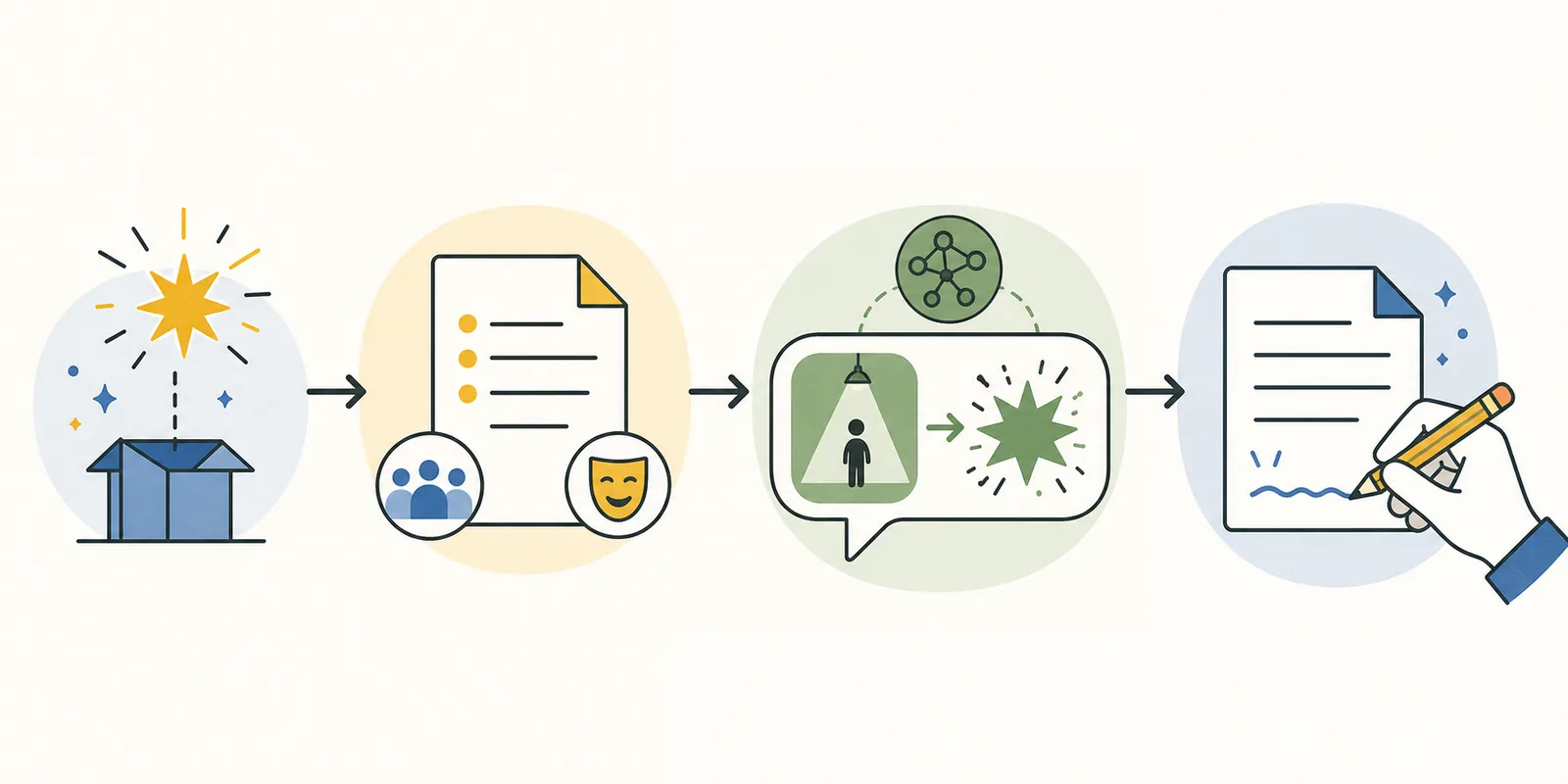
A useful generator request usually has four ingredients: a topic, an audience, a joke format, and a boundary. For example, “write three clean one-liners about office coffee for coworkers, under 18 words each” is easier to follow than “make coffee funny.” The extra context narrows the search space and makes the result easier to judge.
| Stage | What the model tries to do | What the writer should check |
|---|---|---|
| Topic and audience | Connect the subject with familiar situations and vocabulary. | Does the reference make sense to the people who will hear it? |
| Format | Choose a one-liner, pun, dad joke, story setup, or roast pattern. | Is the format right for a card, caption, speech, or private chat? |
| Expectation | Build a likely interpretation before changing direction. | Is the setup clear without overexplaining the joke? |
| Punchline options | Generate several twists that fit the topic and requested tone. | Which version is shortest, freshest, and least forced? |
The final stage is not simply choosing the answer with the biggest laugh emoji. Read each option aloud, remove filler, and test it against the actual moment. A small human edit—replacing a generic “busy day” with a real Monday meeting, for example—often does more for a joke than another round of vague prompting.
- Name the topic and the audience before asking for a joke.
- Choose one format and one tone instead of requesting everything at once.
- Ask for several alternatives so you can compare the twist, not just accept the first answer.
- Edit the best line for the real people, place, length, and boundaries involved.
AI Comedy vs Human Humor: A Practical Comparison
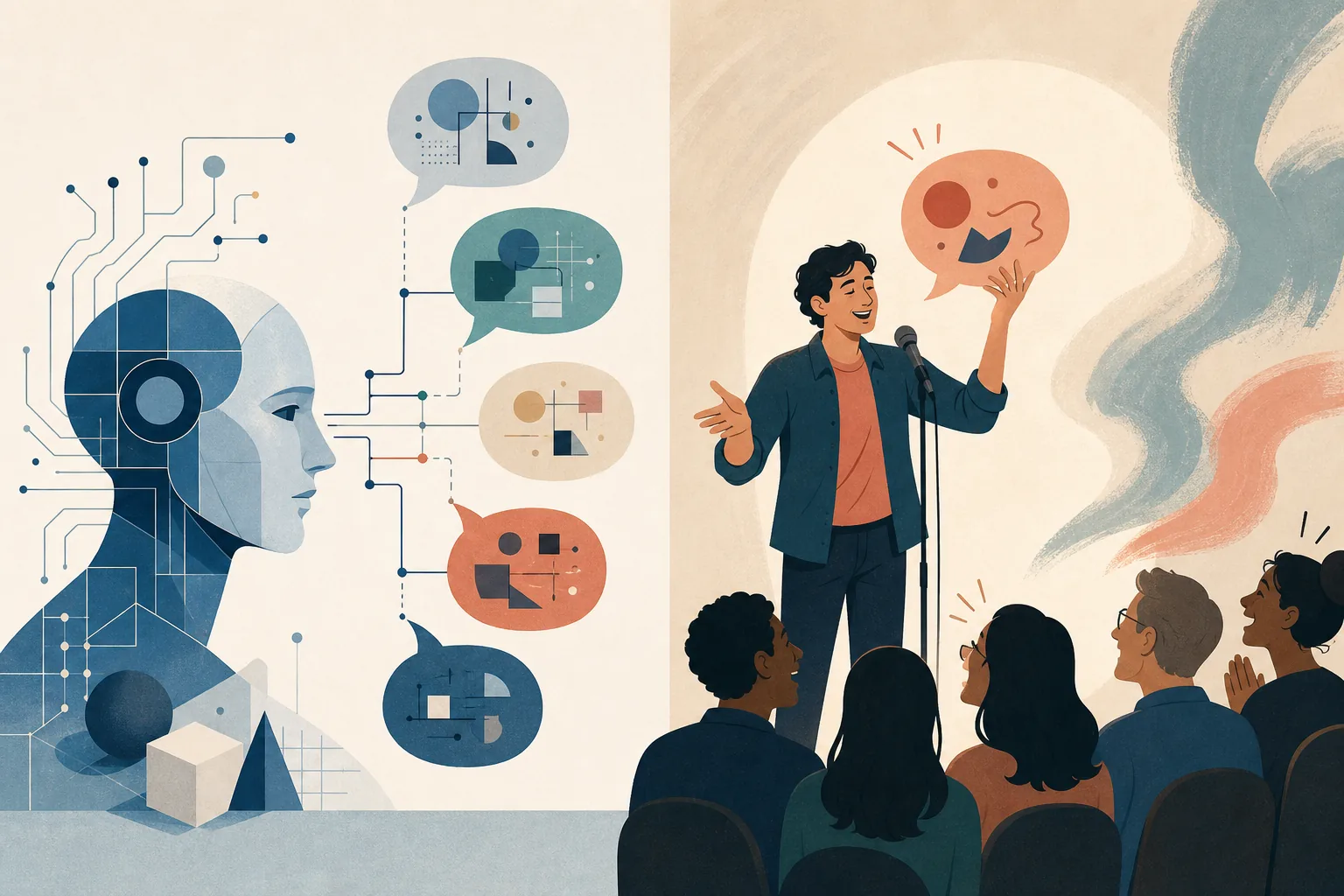
The most useful comparison is not “which one is funnier?” It is “which part of the comedy task does each one handle well?” AI can search through many familiar joke shapes quickly. People notice whether the premise is recognizable, whether the surprise feels earned, and whether the line respects the relationship in the room.
| Comedy job | AI comedy is often good at | Human humor is often better at |
|---|---|---|
| Generating options | Producing many angles from one topic. | Knowing which angle is worth developing. |
| Wordplay | Finding rhymes, double meanings, and familiar puns. | Knowing whether the wordplay sounds natural instead of mechanical. |
| Audience fit | Following explicit audience instructions. | Reading status, shared history, mood, and unspoken boundaries. |
| Timing | Keeping a requested length or structure. | Pausing, reacting, and changing delivery when the room changes. |
| Originality | Combining known patterns in unexpected ways. | Drawing from lived experience and a point of view. |
Best use of both
Use AI as a fast comedy room with many rough ideas, then use human judgment as the editor, performer, and final safety check.
Why AI Jokes Miss the Mark
When an AI joke feels unfunny, the problem is often not that the model cannot form a punchline. The problem is that the request leaves too many decisions open. Broad prompts encourage familiar filler, predictable puns, and references that are technically related but not meaningful to the audience.
- The topic is too broad, so the answer falls back on a common cliché.
- The audience is missing, so the tone is too childish, sharp, formal, or generic.
- The requested format is unclear, so the setup becomes long and the punchline arrives late.
- The joke relies on a cultural reference that the reader may not recognize.
- The line describes why it is funny instead of letting the twist do the work.
- The subject is sensitive, and the generator does not know which boundary matters most.
These misses are useful signals. Instead of repeating “make it funnier,” name the failed property: shorter, warmer, more specific, less obvious, safe for work, or easier to say aloud. A precise revision request gives the next generation a real target.
How to Make AI-Generated Jokes Funnier
The fastest improvement is to add context that a human comedy partner would ask for. Say who will hear the joke, where it will be shared, what kind of laugh you want, how long it can be, and what topics are off limits. Then ask for options rather than a single perfect answer.
For a work chat
Write five clean one-liners about Monday meetings for coworkers. Keep each under 16 words and avoid age, appearance, money, and politics.
For a speech
Create three warm opening jokes about public speaking for a five-minute presentation. They must be easy to say aloud and avoid self-deprecating insults.
For a friend
Write four playful lines about a friend who brings too many snacks on hikes. Keep the teasing affectionate and do not mention private details.
For a rewrite
Keep the setup, replace the predictable pun, and give me three shorter punchlines with a drier tone. Explain nothing after the lines.
- Generate three to five versions instead of polishing one weak line forever.
- Read the options aloud and remove words that slow down the turn.
- Replace a generic subject with one concrete, harmless detail.
- Ask a trusted person whether the tone matches the audience.
- Keep the human edit when it makes the line more personal or more considerate.
When to Use AI Comedy—and When to Write It Yourself
AI comedy is most valuable at the blank-page stage. It can give a content creator several caption directions, help a speaker test an opener, or offer a writer alternatives when the setup is clear but the punchline is stuck. It is also useful for changing one idea into a pun, one-liner, dad joke, or short story format.
| Situation | Good workflow | Why it works |
|---|---|---|
| Brainstorming | Ask for multiple angles, then keep one premise. | AI expands the option set without deciding the final idea. |
| Public speaking | Generate safe drafts and practice the best line aloud. | Human delivery and room awareness matter more than novelty alone. |
| Personal stories | Write the real details yourself, then ask for structure edits. | The lived detail is usually the part that makes the story yours. |
| Sensitive subjects | Use extra constraints or skip generation and write directly. | A person must own the judgment and possible impact. |
Try the AI Joke Generator
Generate several joke formats from a topic, audience, and tone.
Use AI Joke Writing Prompts
Find copy-ready prompt patterns for one-liners, puns, roasts, and speeches.
Compare Punchlines
Turn a setup or unfinished joke into several short punchline options.
Browse One-Liner Jokes
See compact examples and choose the right one-liner format for the moment.
AI Comedy FAQ
Last updated: August 2, 2026