How to Write Humor With AI: A Practical Joke-Punch-Up Workflow
Use AI to explore premises and punchlines faster, then apply human taste, timing, and audience judgment before you share the joke.

Table of Contents
- Quick Answer: How to Write Humor With AI
- The AI Humor Workflow: From Premise to Punchline
- A Prompt Formula That Gives AI Something to Work With
- Before-and-After Joke Editing
- How to Use an AI Joke Generator Without Accepting the First Draft
- A Final Five-Point Check Before You Share an AI Joke
- Limits, Safety, and Human Judgment
- FAQ: Writing Humor With AI
To write humor with AI, start with a specific premise, tell the model who will hear the joke, choose one format, and ask for several short options. Then keep the strongest angle, edit the wording, and check that the joke fits the audience before publishing or performing it.
This is different from asking an AI joke generator to produce a perfect joke in one click. AI is useful for brainstorming, variations, and punchline rewrites, but a person still supplies the lived detail, timing, taste, and responsibility that make humor work in a real situation.
The workflow below shows how to move from a premise to a usable joke without accepting the first draft. It also gives you a prompt formula, before-and-after editing examples, and a practical safety check.
Quick Answer: How to Write Humor With AI
The reliable process is: choose a concrete situation, define the audience and tone, pick one joke format, generate several options, and punch up the best draft with targeted rewrites. A useful request gives the model something specific to notice instead of asking for generic funniness.
The short formula
Premise + audience + format + boundary + rewrite target = a better AI humor draft.
- Replace a broad topic such as “work” with a concrete moment, such as a Monday video meeting that starts with a frozen screen.
- Name the audience and the desired tone: warm, dry, silly, clean, or lightly self-deprecating.
- Ask for three to five versions in one format, such as a one-liner, pun, story beat, or speech opener.
- Select the clearest premise, shorten the setup, and ask for new punchlines that change the direction rather than repeat the same pun.
The AI Humor Workflow: From Premise to Punchline
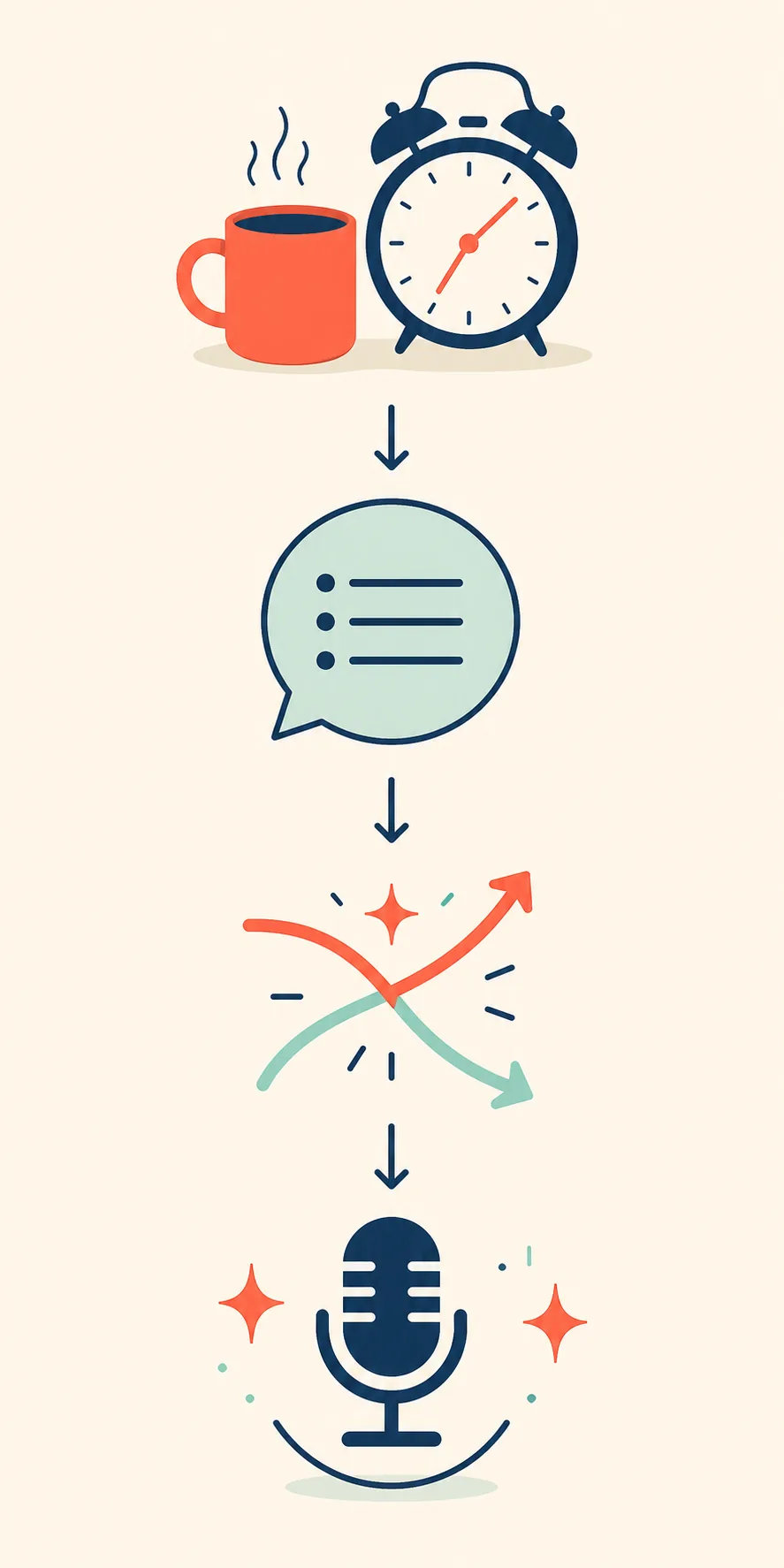
Treat AI as a fast comedy room, not an automatic performer. Give it one clear job at a time: find angles, draft a format, diagnose a weak turn, or rewrite the line for a different audience. Separating those jobs makes it easier to see why an option works or fails.
| Stage | Give the AI | Check before moving on |
|---|---|---|
| Premise | A specific situation, object, habit, or contradiction. | Is there a recognizable detail that can create a turn? |
| Audience | Who will hear or read it, plus the relationship and setting. | Would this reference and tone make sense to that group? |
| Format | One format and a length limit: one-liner, pun, roast, or opener. | Does the setup leave room for a quick, speakable punchline? |
| Options | Three to five different comic directions, not small word swaps. | Which version is clearest, freshest, and easiest to say aloud? |
| Punch-up | A precise edit request: shorter, warmer, stranger, or less obvious. | Did the revision improve the joke without losing the premise? |
Read the shortlist aloud. A line that looks clever on a screen may be awkward in the mouth, too long for a caption, or dependent on an explanation. The human edit is often as simple as replacing a generic “busy day” with a real, harmless detail from the intended situation.
A Prompt Formula That Gives AI Something to Work With
A good humor prompt is a compact creative brief. It does not need to be long; it needs to remove the decisions you already know. State the topic, audience, format, tone, boundaries, length, and the kind of revision you want.
Copyable prompt
Write [number] [format] about [specific situation] for [audience]. Keep the tone [tone] and each line under [length]. Avoid [boundaries]. Give me [revision or ranking instruction].
| Prompt part | What to specify | Example |
|---|---|---|
| Situation | A concrete moment rather than a category. | A cold brew before a 9 a.m. meeting |
| Audience | The people, relationship, and context. | Coworkers in a friendly team chat |
| Format | One structure so the model can manage timing. | Five clean one-liners |
| Boundary | Topics, identities, or tones to avoid. | No layoffs, medical claims, or personal insults |
| Revision | The next decision you want the AI to make. | Rank the best two and make the punchlines less predictable |
If the first batch is weak, diagnose the problem instead of repeating “make it funnier.” Ask whether the setup is too broad, the turn is predictable, the reference is too niche, or the wording is too long. Then request three revisions that address only that problem.
Before-and-After Joke Editing
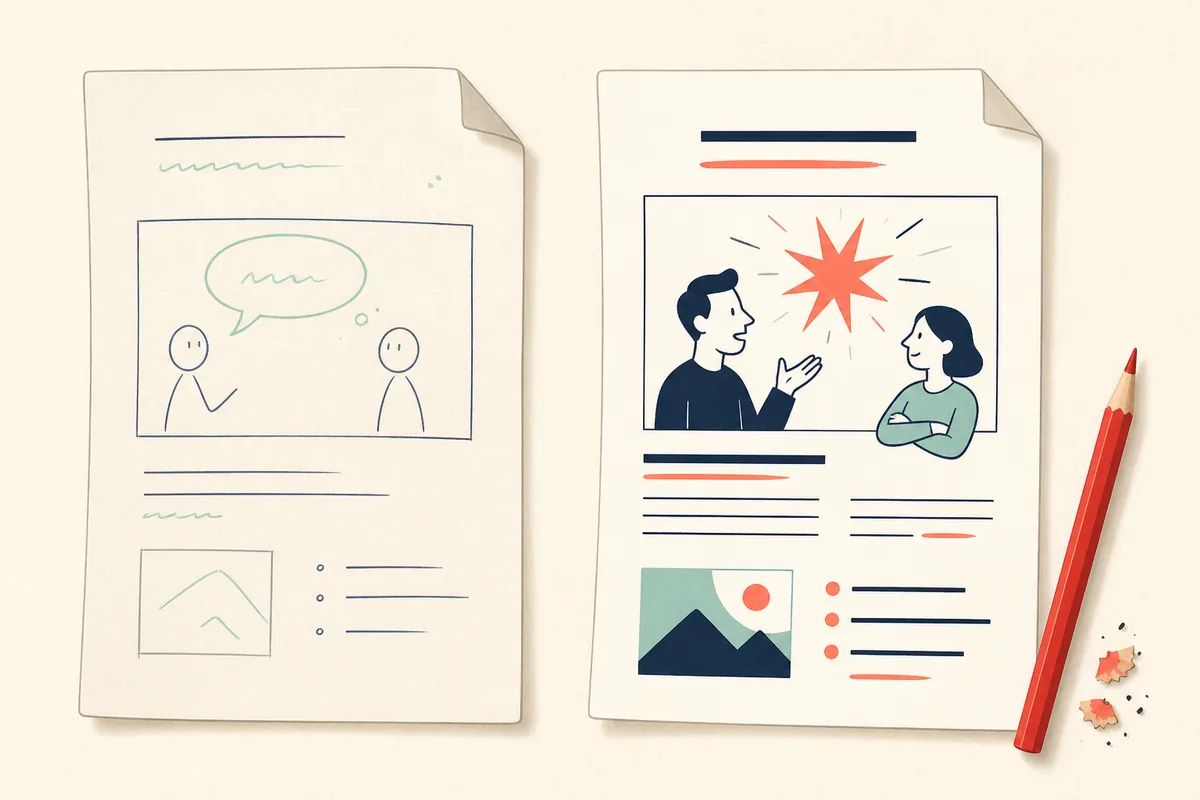
The most useful AI humor skill is often revision. Start with an ordinary draft, identify the weak property, and ask for a limited rewrite. The goal is not to make every line louder; it is to make the premise clearer and the turn more surprising without adding clutter.
| Draft | Targeted rewrite request | What improved |
|---|---|---|
| My calendar is busy because I have many meetings. | Keep the office premise, replace the generic wording with a visual one-liner, and give me five dry punchlines under 16 words. | The request names the format, tone, length, and desired change. |
| I tried to be healthy, but the salad was not good. | Make the setup shorter and use a harmless expectation reversal about ordering fries after one bite. | A specific action gives the punchline a clearer turn. |
| Write a roast about my friend. | Write six affectionate roasts about a friend who is always five minutes late. Avoid appearance, identity, and private information. | The boundary keeps the joke about a harmless habit. |
Keep the human detail. If the line is for a real speech, caption, or group chat, replace a generic model reference with a detail you are comfortable sharing. Do not paste private messages, confidential work information, or someone else’s personal story just to make the joke more specific.
How to Use an AI Joke Generator Without Accepting the First Draft
A focused AI joke generator is useful when you already know the format you want. Use the main generator for broad brainstorming, then move to a punchline or format-specific tool when the premise is clear. Treat each result as a draft to compare, edit, and test—not as a final answer.
- Enter a specific topic and add the audience or use case in the request.
- Generate several options and remove lines that need an explanation to work.
- Keep one premise, then ask for a shorter setup, a different misdirection, or a cleaner tone.
- Read the best line aloud and check that the joke is appropriate for the actual people and setting.
- Save the edited human version, not a raw output that includes private or unverified details.
AI Joke Generator
Start with several joke directions when you have a topic but no format yet.
Punchline Generator
Use a focused tool when you already have a setup and need alternate endings.
AI Joke Writing Prompts
Copy format-specific prompt templates for one-liners, puns, roasts, and speech jokes.
AI Comedy vs Human Humor
See where AI is useful and where human context, taste, and timing remain essential.
A Final Five-Point Check Before You Share an AI Joke
Before you publish, perform one short editorial pass. The best AI-assisted joke is not necessarily the strangest or most polished-sounding option; it is the line that a real audience understands quickly and can enjoy without needing private context or an explanation.
- Premise: Can a listener picture the situation in one sentence, and is the detail specific enough to create a turn?
- Setup: Does every word move toward the expectation, or can you remove a phrase without losing clarity?
- Punchline: Does the ending change direction instead of merely repeating the topic or explaining the joke?
- Audience: Would the people receiving it understand the reference, tone, and relationship behind the line?
- Safety: Have you removed private details, unverified claims, identity-based attacks, and jokes that could cause avoidable harm?
If the answer is “almost” on one point, ask the AI for a narrow revision and compare it with your own edit. Keep the version that sounds natural in your voice. AI can make the drafting loop faster, but the final joke should still feel intentional, speakable, and yours to stand behind.
For a caption, keep the line short enough to scan. For a speech, leave room for a pause and a reaction. For a private joke, protect the relationship by checking that the person being teased would recognize the affection behind it. The same premise can need a different edit in every setting.
Limits, Safety, and Human Judgment
AI can imitate familiar joke patterns, but it cannot reliably understand every relationship, local reference, or emotional consequence. A joke can be structurally neat and still be cruel, confusing, stale, or wrong for the room. The person sharing it owns the final decision.
- Check stereotypes, protected traits, appearance-based attacks, and jokes about trauma or private hardship.
- Do not include confidential company information, private conversations, or identifying details about another person.
- For a workplace or public speech, prefer harmless situations and make the tone easy to interpret without extra context.
- Verify factual claims inside topical humor; a joke is not a license to repeat an unverified accusation.
- If the line needs a paragraph of explanation, choose a clearer option or change the format.
A useful rule
Let AI expand the option set, but let a human decide what is specific, kind enough for the context, and worth saying aloud.
FAQ: Writing Humor With AI
Sources and further reading
Last updated: August 10, 2026